"Muar is one of the most popular tourist attractions in Malaysia to be visited and explored for its food, coffee and historical buildings from the pre-war. An alternative name to it is Bandar Maharani. It is declared the Royal City of Johor by Sultan Ibrahim Sultan Iskandar and is the fourth largest city (after Johor Bahru, Batu Pahat and Kluang) in Johor. It is a big town."
Muar is one of the cities situated at around 179 kilometre from
Johor Bahru. It's a town and port on the south-western coast of West Malaysia. Muar also known as Bandar Maharani for most of the local people staying there.
It's popular for its delicious and inexpensive foods served by food stalls and restaurants. A picturesque town located strategically on the Muar River. Muar is also known for
its agricultural products. The main natural products that are commercially produced are palm oil, gambier, mangosteen, rambutan and durian.
Palm oil have become the main agriculture product as the Johor government promotes plantation of Palm Oil trees through out the state of Johor. There's also a furniture industry, which export to
the international markets such as Europe and America.
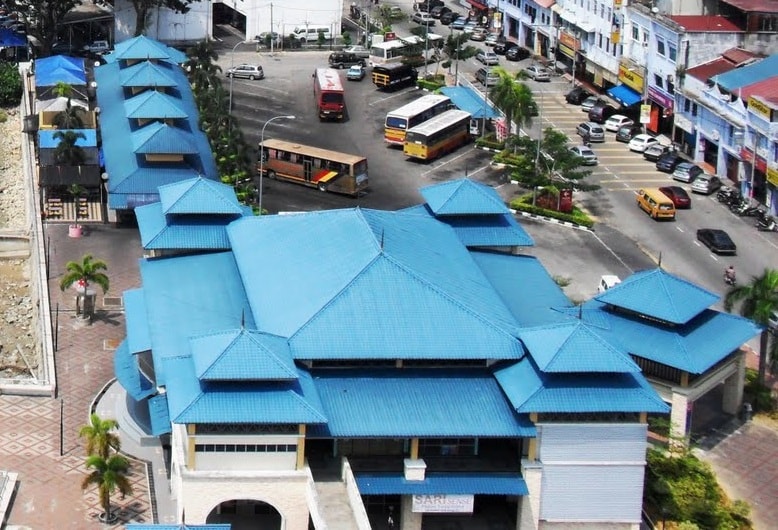
Bus station at the river
Some say the name "Muara" it comes from muara, a word from the Malay Sunda
language, meaning ‘a very wide river pouring into the sea’. Still others believe that it comes from the Hindu words munu, meaning ‘three’, and ar, meaning ‘river’. The ancient peoples of
India had come to Muar looking for gold, but instead found the confluence of the rivers Muar, Serting and Pahang, similar to the ones they had at home. They named this place Muar to remind them of their beloved homeland.
Muar was established, years before
Melaka came into being. Muar played a role in resisting the Portuguese
occupation of Malacca in 1511. In response to attacks from the Portuguese fleet, the Bentayan fort was built by the Sultan of Malacca to repel seaborne invasions.
When the Portuguese conquered Melaka in 1511, its Sultan and his entourage had escaped to Muar. Tourists can enjoy a drive or stroll along tree-lined Jalan Tanjung, which follows the river mouth on the south side. Along this road, you will see mosques, old colonial
houses, government buildings and a beautiful park. For most of the travellers visiting Muar, it's amust to stroll along the tree lined Jalan Tanjung, where Jalan Tanjung is
actually along the river mouth located on the south side. Besides along the river side, Muar is actually a town situated strategically on the Muar River where originally, many believe that the Muar River actually contributed to the growth of Muar due to the fact, where Muar
River is a natural means of transportation in the early days.
Map of Muar
xx
Most leisure hours are lulled away by the meandering banks of the Muar River, the town’s lifeline, by either fishing, canoeing or savouring seafood as the sun blazes in the sky
and burnishes the placid waters in the afterglow. In fact, Muar is actually very popular for its local delicacies where any of the travellers visiting Muar can enjoy delicious and inexpensive foods served by food stalls or restaurants located at
various areas of Muar. One of the most preferred and famous local delicacy in Muar is known as “Otak – Otak” This is a mix blends of fish or prawn in various spices, wrapped normally in coconut leaf.
Muar had received a prestigious award: the cleanest town in Southeast Asia in 2018! It was declared a royal town by Sultan Ibrahim Ibni Almarhum Sultan Iskandar in 2012, Muar has a rich history. Its history is believed to precede the Sultanate of Malacca, with early history recorded at about 1361. Since then, Muar has come a long way and flourished into the popular tourist attraction it is today. Here are some of the tourist attractions in Muar:
A few places to visit:
Grisek Hot SpringThe natural wonder of hot springs can be found in the district of Muar, about 10km
from Parit Jawa town. Like many other hot spring spots in Malaysia, the Grisek hotsprings is more popular with local visitors who believe in the benefits of
the hot mineral waters to soothe musle aches, and provide some relief to certain skin ailments. The hot spring area has chalet, bathing and parking facilities, a children's playground and some shops.
Tanjung Emas Park - If you're Muar and looking for a quiet place to lay out the blanket and enjoy reading a book in the
warm morning sunshine, Tanjung Emas recreational park overlooking Muar River is the place to go. This recreational park has a food court offering local delicacies if you get a little hungry- try the ikan asam pedas (fish cooked with
tamarind sauce and chilli paste) for which this town is famous. There's plenty of rest shades if the sun gets too hot and also a children's playground to keep the little ones amused. Nearby, there is a government rest house offering accommodation in a garden environment for visitors looking to stay in Muar overnight.
Gunung Ledang- Standing at 1,267m,
Gunung Ledang is Johor's highest mountain and it can be accessed both from Johor (Sagil) and Melaka (Asahan). The journey to the top will take approximately five
hours through the dense jungle. Among the locals, Gunung Ledang (formerly Mt Ophir) is more well known for its mysterious reputation rather than as a natural
attraction. At the mention of this mountain, stories of the legendary Puteri Gunung Ledang, entwined with tales of supernatural encounters easily come to mind.
Don Hu Jurassic Parc - The latest attraction in Muar is here! With more than 30 dinosaur sculptures in the park, Don Hu Jurassic Park in Muar will make you feel that you are really in the Jurassic Park.
You can have a thrilling holiday here for free, yes, no admission fee is needed! Located at the Muar Bypass, the park is truly a great place for everyone, especially for kids.
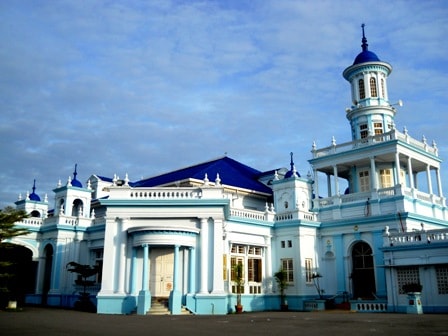
The first Masjid Jamek Sultan Ibrahim in Muar completed construction in 1887. In the 1920s, a committee was formed to consider building a new Masjid Jamek for Muar.
Following a bid to raise funds from the public, the committee in charge of building the new mosque successfully raised RM10,000 for the purpose. The committee then put forward the people's aspiration to the Sultan and obtained the royal consent.
In 1925, works to construct Masjid Jamek Sultan Ibrahim began. Five years later, in 1930, the mosque was completed and was officially opened by Johor's Menteri Besar, Dato Mustafa bin Jaafar. Masjid Jamek Sultan Ibrahim is located
along Jalan Petri, close to mouth of Muar River.
The majestic Masjid Jamek 2 - the second mosque (built in 1999), a replica of the Masjid Jamek Sultan Ibrahim is a breathtaking sight. It was built on the opposite bank of Muar River in
Tanjung Agas. The two mosques formed a spectacular landmark, especially for those who enter Muar from the river mouth. Masjid Jamek 2 was completed in 1999 and can accommodate 5,000 Muslim congregations.
GETTING TO MUAR If you're driving from
Kuala Lumpur on theNorth South Expressway (NSE),
take the Tangkak exit (Interchange 235) and drive on past Sg. Mati and Parit Bunga (on highway 23 and 5). Muar town is about 27km from the Tangkak exit.
From the Travel Times:
WHAT's the first thing that comes to mind when you hear the name Muar? If it's mee bandung Muar, you're not alone. Although you can get a taste of "mee bandung Muar" elsewhere, nothing beats the "original" specialty noodles in the Johor town itself. Even in Muar, there are many stalls and restaurants that offer the southern favourite but, based on consensus, Abu Bakar Hanifah's version from the hand-me-down recipe is the real thing. It's all in the gravy – a thick paste of prawn and chillies blended together and mixed with some beef soup. The gravy goes with a bowl of noodles, some beansprouts and a sprinkling of little egg pieces, beef and tofu. Abu Bakar, who now sells his noodles at the Wah San restaurant in Jalan Abdullah, has been preparing mee bandung Muar since he was a little boy. "I've been doing this for more than 40 years, first helping my father in his
stall in front of the Rex cinema way back then before moving to Jalan Abdullah in 1961," he says. His father, who migrated from India, learned how to make mee bandung from a Javanese man, a Muar native. A couple of steps down the one-way street of Jalan Abdullah, you can turn right to Jalan Sulaiman. Here, you can have satay for breakfast from as early as 7.30am. "Satay is prepared early for breakfast to accompany other food such as lontong and nasi lemak," says Hud Abdul Rahman who has just taken over the satay business from its previous owner at Kedai Kopi Suan Chin. For the past 70 years or so, says Hud, satay has been prepared here for breakfast until lunchtime. "But it is only here in Jalan Sulaiman you can get satay this early in Muar." The most famous satay in Muar is satay perut (small intestine). From Muar town, another gastronomic attraction nearby is the asam pedas in Parit Jawa, a fishing village about 12 km away. There are four asam pedas stalls by the riverbank near Pantai Leka – offering the dish comprising many different fish, with stingray being the favourite. The four stalls are equal favourites with locals and Muar folk. A stall owner, who wished to be known only as Kak Ida, says making asam pedas is a family tradition started off by her great-grandparents who had a small stall by the Leka beach. Indeed, in the case of Muar, the town residents will vouch for its many gastronomic delights. But more than that, Muar has a picturesque, calming waterfront. The Sungai Muar flows through the town into the Straits of Malacca, and near where the river joins the sea is Tanjung Emas – the town's family park, rest and recreation centre. On weekends, especially, the park teems with people. Well, Muar leaves the impression that it takes a lot to beat the joys and benefits of a small town (albeit developing) life.
Hotel Pelangi Muar
This property is located in the heart of Muar Town which is surrounded by shopping malls, entertainment facilities and close to the Muar River. All the well appointed accommodations are designed to meet the needs of both business and leisure travelers. The rooms are perfectly equipped with a LCD TV, air conditioner, telephone with IDD access, shower with bath tub, complimentary coffee and tea making facilities and warm welcoming staffs. Featuring an onsite dining at Pelangi Coffee House, guests can enjoy delicacies over a meeting or family gathering, within relaxed and cozy atmosphere that also provides quick internet access. The property also comprises of fully equipped Meeting and Conference hall, where guests can host seminars or cocktail parties. Hotel Pelangi Muar is a great value for money.
Conveniently located in Muar, Sabak Awor Resort is a great base from which to explore this vibrant city. From here, guests can enjoy easy access to all that the lively city has to offer. With its convenient location, the hotel offers easy access to the city's must-see destinations.
Sabak Awor Resort also offers many facilities to enrich your stay in Muar. A selection of top-class facilities such as airport transfer, car park, room service, tours, restaurant can be enjoyed at the hotel.
All guest accommodations feature thoughtful amenities to ensure an unparalleled sense of comfort. The hotel's recreational facilities, which include massage are designed for escape and relaxation. When you are looking for comfortable and convenient accommodations in Muar, make Sabak Awor Resort your home away from home.